
Car Calendar
Receive notifications about upcoming cars
No account yet?
What you get with a free account
- Follow the premieres of the cars you care about – all in one place
- An e-mail when a car you follow is revealed
- Follow more premieres with a single click
- Free and no spam
Already have an account?








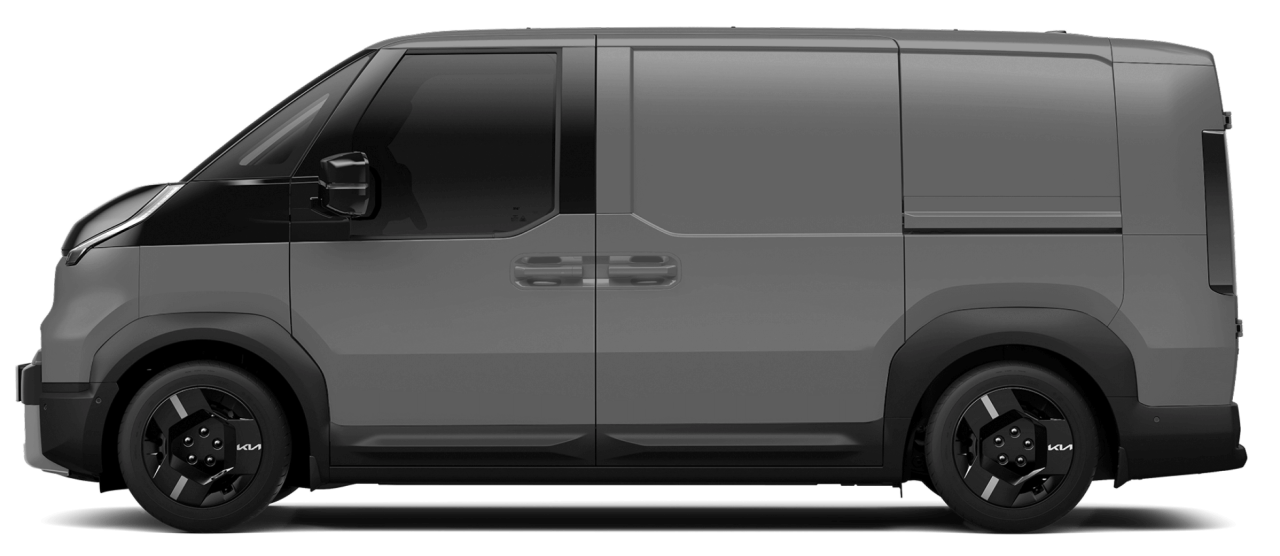





Kia PV5 Chassis CabElectric chassis cab, 2026
Technical description:
Model: PV5 Chassis Cab
Body type: Chassis cab
Seating capacity: 2
Drive: Rear-wheel drive
Power: 204 hp
Torque: 350 Nm
Top speed: 160 km/h
Range WLTP: 400 km
Charging AC: 11 kW
Charging DC: 100 kW
Charging 10-80%: 45 minutes
V2L function: Yes
OTA updates: Yes
Safety systems: ABS, ESP, lane assist
Positioning in range: Commercial electric vehicle
Don't miss the Kia PV5 Chassis Cab reveal
Leave your e-mail and we'll let you know about the premiere and new details on this model.
Next, you'll create a free account. No spam.
What's new
Kia presented the PV5 Chassis Cab at the Solutrans trade fair in Lyon, adding an electric cab-and-chassis base aimed at delivery, logistics and service operators. The version extends the PV5 family beyond the conventional van, minibus, camper and vehicle for disabled users. It targets an electric LCV area where bodies such as box vans, dropsides and refrigerated conversions are increasingly in demand.
The model is part of Kia's Platform-Beyond-Vehicle strategy, a programme intended to move the company into mobility solutions for business users. Marc Hedrich, president and CEO of Kia Europe, says e-commerce is shaping logistics, cities are tightening emissions rules and companies want smarter, connected solutions. In that context the PV5 is intended to work not only as a vehicle, but also as a component in a fleet, body and software ecosystem.
Kia developed a dedicated electric platform for this mobility ecosystem. Its skateboard layout uses a flat underfloor structure, a low-mounted battery and a front-mounted drive unit. Standardised interfaces are intended to simplify the conversion process, while the integrated modular architecture allows common components to be used across several body styles.
- PV5 Cargo as a compact delivery van.
- PV5 Minibus for passenger transport.
- PV5 Camper for private buyers.
- A version adapted for disabled users.
- PV5 Chassis Cab as a base for specialist conversions.
Specifications and technology
The PV5 Chassis Cab is 4.61 metres long and uses a two-seat cab that largely follows the PV5 Cargo. The cabin has low entry zones, numerous storage spaces and a cockpit arranged around everyday commercial use. Kia's modular Add Gear accessory system can integrate industry-specific devices or holders.
Behind the cab the frame remains open, allowing customers to specify body length and height according to the job. Kia quotes a payload of up to one tonne and a box body with up to 8 cubic metres of load volume. That makes the vehicle relevant to parcel carriers, platform bodies and refrigerated bodies, the areas named as seeing rapid growth in demand for electric solutions.
Drive system and charging
The drivetrain follows the basic data of the PV5 range. The front-drive system delivers, depending on battery, up to 120 kW/163 hp and 250 Nm of torque. The low battery position shifts the centre of gravity downward, which is intended to support more stable handling when taller bodies are fitted.
Two battery sizes are available, 51.5 kWh and 71.2 kWh. In existing PV5 variants this combination allows a range of up to 416 kilometres. Kia also plans a smaller and cheaper 43.3 kWh battery, a capacity that should suit parcel services because inner-city delivery routes are rarely longer than 150 kilometres.
| Parameter | Value |
|---|---|
| Length | 4.61 m |
| Seats | 2 |
| Power | up to 120 kW/163 hp |
| Torque | 250 Nm |
| Battery | 51.5 kWh or 71.2 kWh, later 43.3 kWh |
| Range | up to 416 km in existing variants |
| AC charging | 22 kW optional |
| 10-80% charging | around 30 minutes in optimal conditions |
Markets, prices and availability
The PV5 Chassis Cab made its premiere at Solutrans in Lyon, although no exact debut day was stated. The chassis will be built in Korea, where Kia also wants to produce standardised bodies with global demand. Planned versions already include an accessible conversion with a ramp and a double-cab dropside aimed at construction-site use.
Specialist conversions will be handled by local partners such as Bott, Sortimo and Würth. On the show stand the new Chassis Cab was displayed together with the PV5 Cargo, which drew attention in October with a Guinness World Records entry. Fully loaded, the van covered 693.38 kilometres on one charge, demonstrating the efficiency of the drivetrain in real commercial-vehicle conditions.
The PBV strategy is not limited to hardware. Kia is also building its Kia Business Solutions digital ecosystem, including a business portal, a fleet management system, the business mode of the Kia app and its own charging service. The company also wants to develop its own apps and open the system for specialist applications from conversion and body-building companies.
The PV5 van starts at 33,450 euros net, while the Chassis Cab costs around 1,000 euros net less. The high-roof Cargo is due to follow in 2026, and the larger PV7 is scheduled for 2027. Kia did not provide a precise sales launch date for the Chassis Cab, nor a detailed market list.
Verdict
The PV5 Chassis Cab gives Kia an electric commercial base that can be configured for a broad range of business tasks. Its strongest case comes from the open rear frame, the known PV5 electric hardware and the fleet-oriented digital services being built around it.
Frequently asked questions
When is the Kia PV5 Chassis Cab premiere or reveal?
The Kia PV5 Chassis Cab was presented at the Solutrans trade fair in Lyon. On the CarsUpcoming calendar, its premiere is listed as November 2023 with month-level precision, with no exact day stated.
When will the Kia PV5 Chassis Cab go on sale in the UK?
Kia has not announced a precise UK sales launch date for the PV5 Chassis Cab. A detailed market list has not been provided either.
How much will the Kia PV5 Chassis Cab cost?
In Europe, the PV5 van starts at 33,450 euros net, and the Kia PV5 Chassis Cab is said to cost around 1,000 euros net less. No UK price has been announced, and the euro figure should not be treated as a UK price.
Should I wait for the Kia PV5 Chassis Cab or buy the current model now?
Kia has not said that the PV5 Chassis Cab replaces a specific current model, so a direct comparison is not possible yet. What is known is that it is an electric cab-and-chassis base with an open rear frame, a two-seat cab and a focus on fleet and conversion use.
What is the Kia PV5 Chassis Cab built for?
The Kia PV5 Chassis Cab is aimed at delivery, logistics and service operators. Its open rear frame is intended for bodies such as box vans, dropsides, refrigerated conversions and other specialist builds.
Create account
What you get with a free account
- Follow the premieres of the cars you care about – all in one place
- An e-mail when a car you follow is revealed
- Free and no spam
Log-in
Please log-in to subscribe!