
Car Calendar
Receive notifications about upcoming cars
No account yet?
What you get with a free account
- Follow the premieres of the cars you care about – all in one place
- An e-mail when a car you follow is revealed
- Follow more premieres with a single click
- Free and no spam
Already have an account?








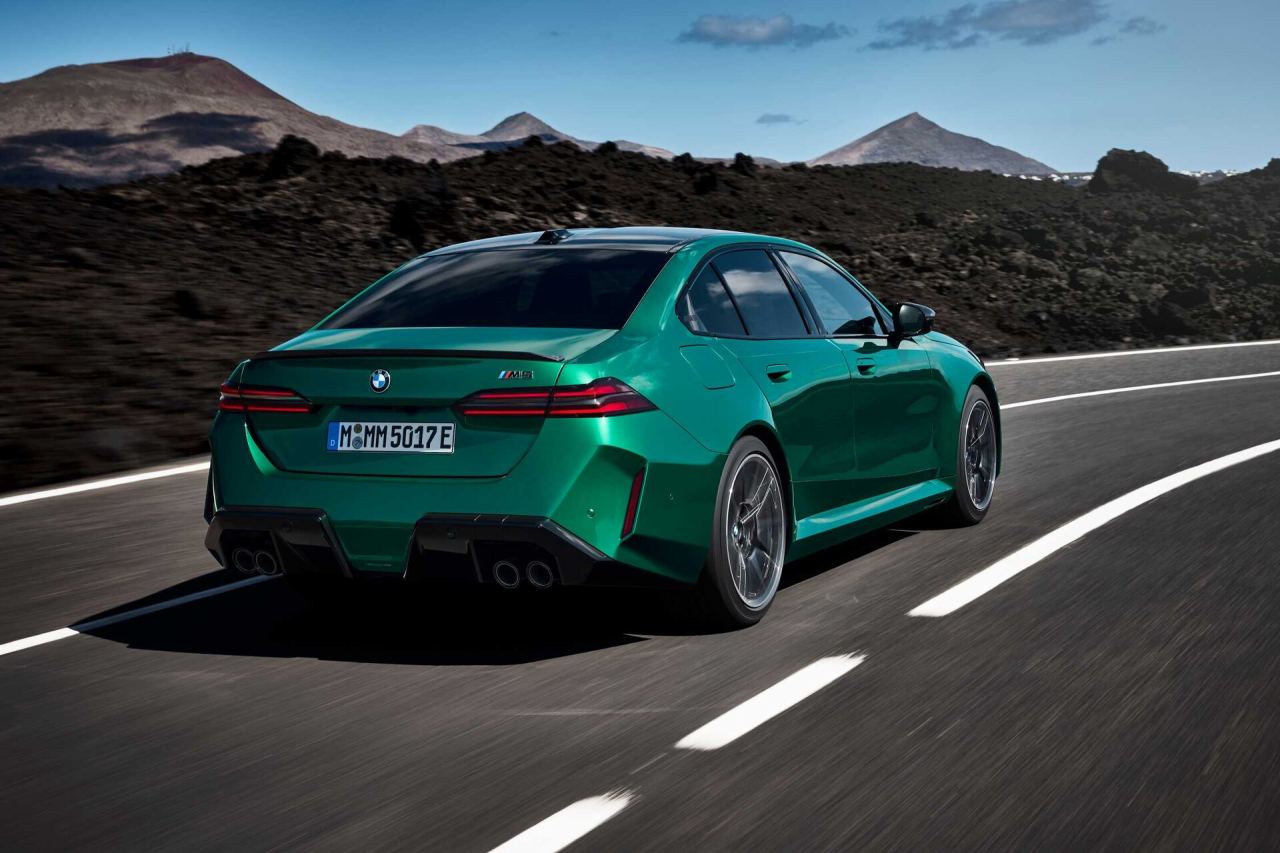
BMW M5
Technical description:
Powertrain: V8 with electric unit
System: iDrive X with 17.9-inch screen
Display: panoramic windshield
Instruments: 3D display
Don't miss the BMW M5 reveal
Leave your e-mail and we'll let you know about the premiere and new details on this model.
Next, you'll create a free account. No spam.
What's new
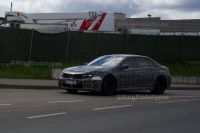
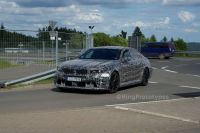
The facelifted BMW M5 has been caught testing hard at the Nürburgring, with brake rotors glowing red as the prototype is pushed ahead of its planned 2027 launch. The car is still heavily camouflaged, but the footage points to an updated G90 rather than a new generation. That matters because the current M5 arrived as a debated plug-in hybrid V8 sedan with far more mass than earlier combustion-only versions.
The most significant change of direction concerns the styling. BMW tested several front-end proposals in parallel, including a more radical design influenced by Neue Klasse and the electric i3. That version used slimmer headlights and a horizontal kidney grille that would have moved the M5 much further away from its current face. According to people close to the project, customer feedback killed the aggressive proposal, so the production car is expected to take a more evolutionary route.
On the outside, the changes are expected to follow normal LCI practice. Revised headlights, new taillight graphics and minor bumper alterations are on the menu. The doors, roof and main body panels are set to remain unchanged. In other words, BMW is not reshaping the silhouette, but updating the areas that can refresh the car without changing its basic body structure.
- revised front headlights,
- new rear light graphics,
- minor bumper changes,
- unchanged doors, roof and main body panels.
Specifications and technology
Cabin and interface
The cabin is where the heavier work takes place. BMW is bringing in iDrive X, which means a 17.9-inch central touchscreen and the Panoramic Vision windshield projection system already shown in Neue Klasse models. The physical instrument cluster is expected to disappear, with information handled by a next-generation 3D head-up display.
The rotary iDrive controller is almost certainly leaving the interior as well, ending the presence of a control that has been associated with BMW cabins for more than two decades. An optional passenger-side screen is also planned, a feature filtering down from the 7 Series. As a result, the facelift is not only about lamps and bumpers, because the main change for the driver will be the way the car is operated.
Powertrain and brakes
Under the bodywork, the powertrain is expected to carry over. The M5 keeps its twin-turbo V8 paired with an electric motor and a battery pack. A charging port visible on the prototype confirms that electrification remains part of the package, while the German license plate ending in “E” identifies it as a plug-in hybrid.
Power output remains one open question. The current European-spec M5 lost horsepower because of Euro 7 emissions rules, and BMW engineers are reportedly working to recover some of that loss. That will matter to buyers who compare the European car with the U.S.-spec version and already feel shortchanged by the difference.
The glowing brake rotors underline the central tension in this M5. It is being asked to work as a high-performance track car while also carrying the extra hardware of a plug-in hybrid system. The current layout pushes curb weight beyond 5,000 lb, so repeated fast laps at the Nürburgring place far more strain on the braking system than a lighter, purely combustion M5 would have done.
Markets, prices and availability
The updated M5 is expected to launch next year, meaning 2027, while production of the facelifted sedan is expected to begin in July. No exact reveal date, prices or full market list have been given. Those details remain undisclosed, as does the final output if BMW succeeds in clawing back some of the horsepower lost to European emissions requirements.
The M5 Touring wagon will receive the same treatment on a similar timeline. The standard 5 Series sedan and wagon facelifts should arrive just ahead of the M variants, following BMW’s usual sequencing. The same period is shaping up to be busy for BMW M, with the electric M3 also expected to break cover.
- facelifted M5 sedan production: July 2027,
- M5 Touring: same treatment on a similar timeline,
- standard 5 Series sedan and wagon: expected before the M models,
- electric M3: also expected to appear in 2027.
BMW is balancing two design directions here. The Neue Klasse language works naturally on dedicated electric models, where buyers expect a more futuristic look, but applying it to a high-priced V8 sedan aimed at established M customers proved to be a more delicate call. That is why the production M5 facelift is expected to keep the exterior safer while the cockpit and digital systems move much further.
Verdict
The facelifted BMW M5 looks like an update with two different speeds: cautious sheet metal changes outside and a much deeper digital overhaul inside. With the plug-in hybrid V8 retained, Nürburgring testing and overheated brakes show that the core challenge remains the same: making a very heavy electrified sedan behave like an M car under hard use.
Frequently asked questions
When is the BMW M5 premiere or reveal?
CarsUpcoming lists the BMW M5 premiere for Q3 2027. An exact reveal date has not been announced yet.
When will the BMW M5 go on sale in the UK?
The UK market launch date for the BMW M5 has not been announced. Production of the facelifted sedan is expected to begin in July 2027.
How much will the BMW M5 cost?
BMW has not announced pricing for the BMW M5 in any market. There is no confirmed UK price yet.
Should I wait for the BMW M5 or buy the current model now?
Waiting should bring the updated cabin with iDrive X, a 17.9-inch central screen, Panoramic Vision windshield projection and a next-generation 3D display. The facelift is expected to keep the plug-in hybrid V8 layout and use evolutionary exterior changes rather than a new body.
What powertrain will the BMW M5 have?
The BMW M5 is expected to keep a plug-in hybrid setup with a twin-turbo V8, an electric motor and a battery pack. Final output has not been announced.
Create account
What you get with a free account
- Follow the premieres of the cars you care about – all in one place
- An e-mail when a car you follow is revealed
- Free and no spam
Log-in
Please log-in to subscribe!