
Car Calendar
Receive notifications about upcoming cars
No account yet?
What you get with a free account
- Follow the premieres of the cars you care about – all in one place
- An e-mail when a car you follow is revealed
- Follow more premieres with a single click
- Free and no spam
Already have an account?








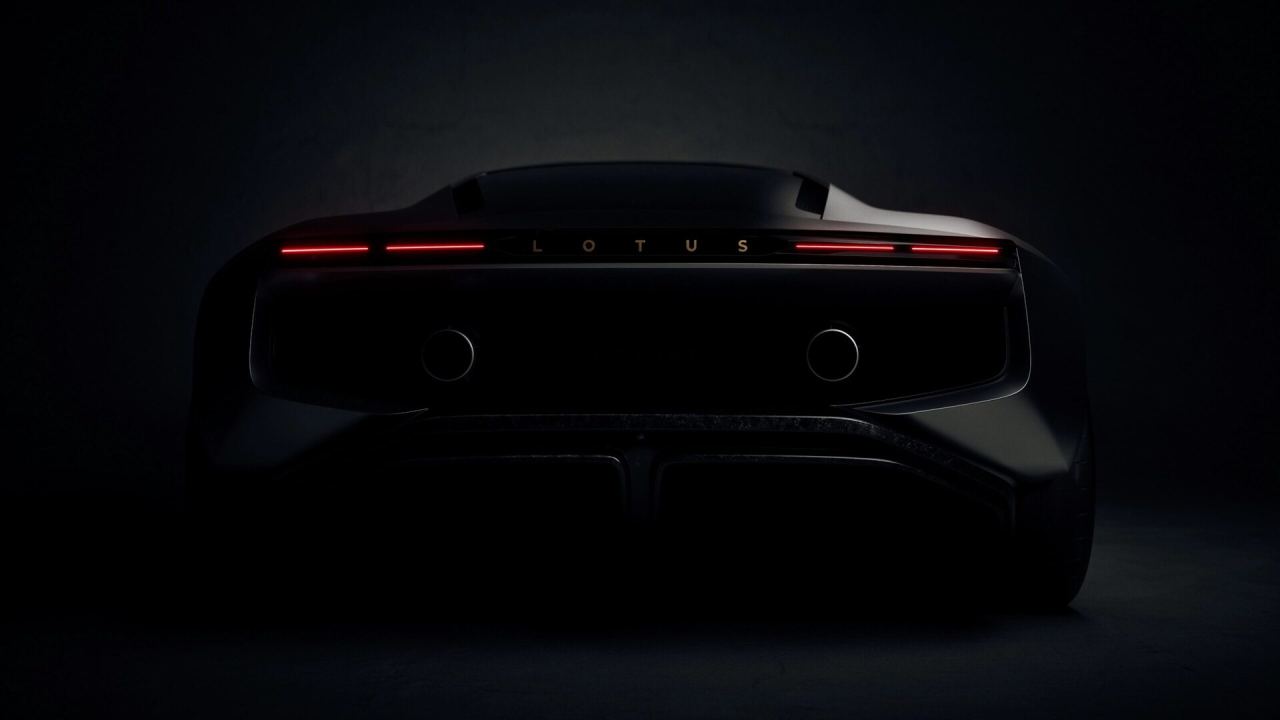

Lotus Esprit
Technical description:
Model: Esprit
Drive: Hybrid
Power: V-8 nearly 1000 hp, V-6 more than 536 hp
Torque: 516 lb-ft
Expected premiere: 2028
Don't miss the Lotus Esprit reveal
Leave your e-mail and we'll let you know about the premiere and new details on this model.
Next, you'll create a free account. No spam.
What's new
The Lotus Esprit is coming back as the Type 135, but not as the electric car originally planned. The battery-only project is dead, and the revived model will instead use two combustion-based hybrid powertrains: a lighter hybrid V6 and a hybrid V8 targeting close to 1000 hp. CEO Feng Qingfeng confirmed the change during a recent earnings call.
The key shift is the move away from the fully electric successor Lotus had once planned for the Emira. The Type 135 was first conceived as a battery-electric sports car, at a time when many manufacturers were promising all-electric futures. Slower demand, range concerns and weight concerns pushed Lotus to rethink the project.
The V6 version is the central part of the story because it fits more closely with Colin Chapman’s idea that adding lightness mattered more than adding power. The described unit is a twin-turbo 3.0-liter V6, paired with an electric motor through an automatic transmission. That layout is presented as a more faithful expression of the Lotus formula than the much more powerful V8 version.
The new Esprit will sit between the Emira and the Evija in the Lotus range. Qingfeng framed it that way directly, saying the car would preserve the emotional connection Emira owners have with Lotus mechanical handling while using V8 hybrid technology to approach the technical benchmark set by the Evija. The spread is large, because the Emira starts at about $80,000, while the Evija costs roughly $2 million.
Specifications and technology
The powertrain plan splits the range into two distinct versions, with one focused more on lower weight and the other on much higher output. Both engines come from Horse, the joint venture between Renault and Geely, Lotus’s parent company. The announced engine choices are:
- a hybrid twin-turbo 3.0-liter V6 paired with an electric motor and an automatic transmission,
- a hybrid V8 with an eight-speed dual-clutch gearbox and a combined output target just below 1000 hp.
The V6 is almost certainly the same hybrid unit Lotus has planned for the updated Emira. In that application, it reportedly produces 536 hp and 516 lb-ft of torque. The Esprit version is expected in the report to be tuned higher, although Lotus has not said by how much.
The V8 hybrid uses an eight-speed dual-clutch transmission and aims for a combined output just under the 1000 hp mark. Lotus says it is working hard to keep the weight of the larger powertrain under control. That statement matters because hybrid systems add batteries, motors and cooling hardware, all of which work against the low-weight philosophy associated with the brand.
| Parameter | Value |
|---|---|
| V6 powertrain | twin-turbo 3.0-liter V6 with electric motor |
| Reported V6 output in updated Emira | 536 hp |
| Reported V6 torque in updated Emira | 516 lb-ft |
| V8 powertrain | hybrid V8 with eight-speed dual-clutch gearbox |
| V8 target output | just under 1000 hp |
Markets, prices and availability
The full reveal and the start of production are both targeted for 2028, with the car arriving as a 2029 model. Lotus has said more details will follow in the months ahead. No motor show, launch venue or exact day has been named, so the premiere window is the full 2028 calendar year.
Pricing is still unanswered. The report says that if the V6 model comes in under $150,000, Lotus would have a serious alternative for buyers considering the Porsche 911 Turbo S and Corvette ZR1 crowd. If it moves beyond $200,000, it enters a tougher part of the market with many established names.
The other missing number is curb weight. Lotus has not disclosed weight targets for either version, despite acknowledging the challenge of controlling the mass of the larger V8 hybrid system. The V6 needs to be meaningfully lighter than the V8 to justify its role as the lighter choice rather than merely the slower one.
- full reveal: 2028,
- production start: 2028,
- model year: 2029,
- pricing: not announced, with $150,000 and $200,000 used as reference points,
- curb weight: not disclosed for either version.
Verdict
The revived Esprit is no longer the electric successor Lotus once planned, but a hybrid supercar project built around two very different powertrains. Its credibility will depend on the numbers Lotus has not released yet, especially price and weight for the V6 model.
Frequently asked questions
When is the Lotus Esprit premiere?
The full reveal of the Lotus Esprit is planned for 2028. No exact date, motor show or launch venue has been announced, so the current premiere window is the full 2028 calendar year.
When will the Lotus Esprit go on sale in the UK?
Production of the Lotus Esprit is targeted for 2028, with the car arriving as a 2029 model. A UK on-sale date has not been announced.
How much will the Lotus Esprit cost?
Lotus has not announced UK pricing for the Esprit. The only figures given are reference points in dollars with no specific market stated: under $150,000 for the V6 would make it a serious alternative to the Porsche 911 Turbo S and Corvette ZR1, while beyond $200,000 would put it in a tougher part of the market.
Should I wait for the Lotus Esprit or buy the current model now?
Waiting gets you the revived Esprit Type 135 project with hybrid V6 and hybrid V8 powertrains instead of the battery-electric successor Lotus once planned. The current Emira is available now, but a full comparison is not possible yet because Lotus has not released final pricing or weight figures for the Esprit.
How powerful will the Lotus Esprit be?
The Lotus Esprit is planned with two hybrid powertrains. The V6 is linked to the unit expected for the updated Emira, where it reportedly makes 536 hp and 516 lb-ft, while the hybrid V8 is targeting just under 1000 hp.
Create account
What you get with a free account
- Follow the premieres of the cars you care about – all in one place
- An e-mail when a car you follow is revealed
- Free and no spam
Log-in
Please log-in to subscribe!