
Car Calendar
Receive notifications about upcoming cars
No account yet?
What you get with a free account
- Follow the premieres of the cars you care about – all in one place
- An e-mail when a car you follow is revealed
- Follow more premieres with a single click
- Free and no spam
Already have an account?











Lexus LFA
Technical description:
Powertrain: electric
Battery Technology: solid-state
Don't miss the Lexus LFA reveal
Leave your e-mail and we'll let you know about the premiere and new details on this model.
Next, you'll create a free account. No spam.
What's new
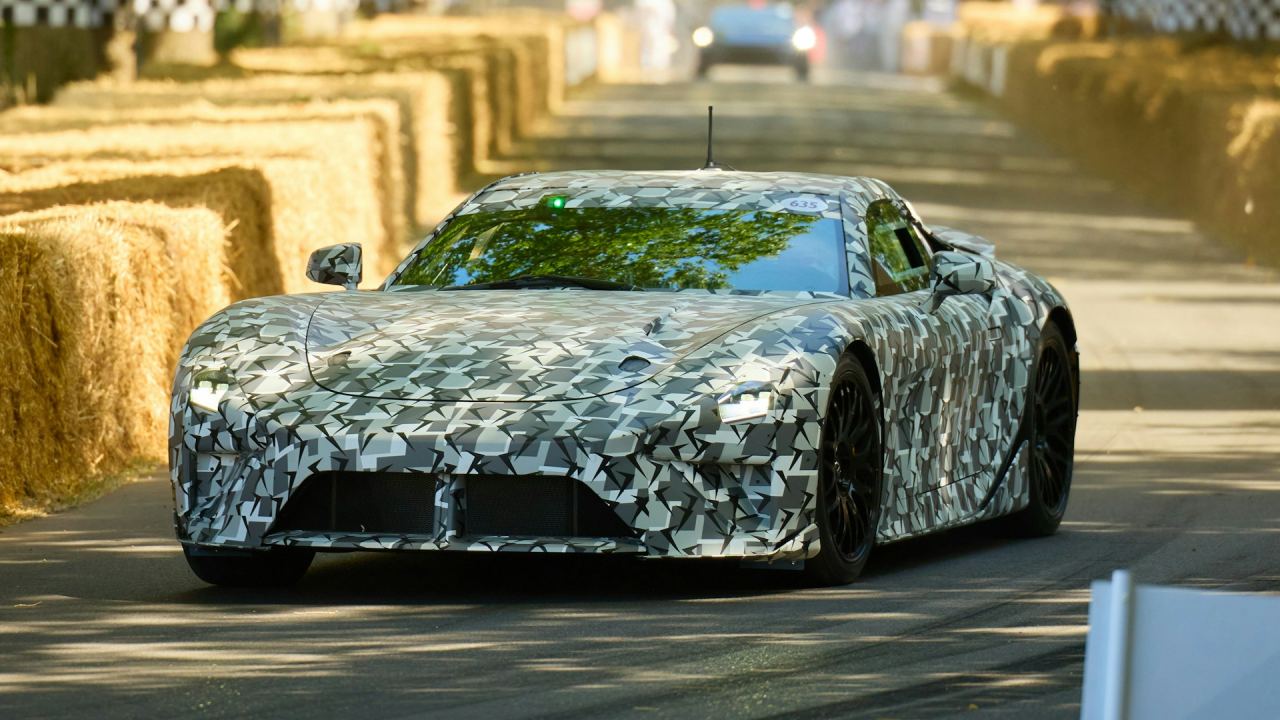
A fully functioning electric Lexus LFA prototype made a surprise appearance at the Goodwood Festival of Speed, and the car could reportedly reach production as the third member of Toyota’s new supercar family. After the V8-powered Toyota GR GT road car and the GT GT3 racer debuted last year, Lexus now appears to be preparing a battery-powered variant. That means the spiritual successor to the LFA will not continue the story of the high-revving V10.
Heavy camouflage did not hide the prototype’s links to the earlier concept. The car retains a very long nose, an aggressive stance and upright headlights, which on the prototype sit behind clear covers rather than being left open as they were on the original show car. The vehicle also uses polycarbonate windows, although these are expected to be replaced by glass on the production version.
The biggest change is the powertrain. The previous LFA was defined by its V10 engine, while the new model is set to use a battery-electric powertrain. This should reportedly bring a significant uplift in performance, although the question remains how Lexus will deliver the sense of theatre expected from a car carrying such an important badge.
- the prototype appeared at the Goodwood Festival of Speed,
- the car is described as a spiritual successor to the Lexus LFA,
- the V10 will be replaced by a battery-electric system,
- the car will share key structural elements with the Toyota GR GT.
Specifications and technology
Structure, weight and battery
Under the skin, the new Lexus is set to use many of the same solutions as the Toyota GR GT. The two cars are expected to share most of their core structure. In contrast with the previous LFA, which used an expensive carbon-fibre tub, the electric model is expected to feature an aluminium structure.
That choice could matter for weight. The V8-powered Toyota GR GT already weighs around 1,750kg, and the electric Lexus is expected to be heavier because its battery-electric powertrain will be substantially heavier than the Toyota’s combustion system. As a result, the first LFA’s reputation as a lightweight supercar is unlikely to be repeated in the same way.
The car could also become a test bed for Toyota’s solid-state battery development. The company says this technology is getting very close to viable mass production and reckons it will be used as soon as 2028. There is reportedly a good chance it will sit beneath a future Lexus supercar based on this concept.
Solid-state batteries promise higher energy density, more consistent performance across a wider temperature range and greater stability if involved in an accident. The new batteries are also intended to reduce weight and increase range in future electric cars. Battery capacity, power output, driving range, charging time and acceleration figures have not been given.
Cabin and driving feel
Lexus is working on augmented engine noise and simulated gearshifts, both designed to bring more driver involvement to electric vehicles. In that context, a V10 soundtrack may not be entirely out of the picture, but this time it could come from Yamaha speakers. That would be a clear departure from the previous LFA, where the sound came from a Yamaha-tuned combustion engine.
The interior shown at the Japan Mobility Show in 2025 previewed a design language and touchscreen system set to be rolled out across future Lexus models. The key feature is a digital interface with a three-surface display that both shows and controls driving functions. Lexus has also been exploring a separation between driver and passenger experiences, including a different colour for the driver’s environment and a dashboard curved towards the driver.
That cockpit layout is not entirely new for the brand. A similar technique was already used on the LC Coupe, which went off sale in the UK in 2024. In the LFA, however, the arrangement forms part of a broader attempt to give the cabin character through displays, sound and controls without relying on a combustion engine.
Markets, prices and availability
Lexus has not announced a specific date for the production car’s reveal. The existence of a working prototype suggests a full debut could happen as early as 2027. This remains an expectation, because the manufacturer has not given a day, month or official launch schedule.
Production may be limited by capacity. This could be especially important if the V8-powered Toyota GR GT is oversubscribed. No price, market list, planned production number, trim structure or direct rivals have been given.
The closest market context is Toyota’s new supercar family. It consists of the road-going GR GT, the GT GT3 racer and the planned electric Lexus. In that line-up, the LFA would act as the battery-powered counterpart to the combustion and racing cars while keeping its own purpose and powertrain concept.
Verdict
The new Lexus LFA points to a very different interpretation of the name, with electric drive and a structure related to the Toyota GR GT replacing the V10 formula. The main questions concern weight, the possible use of solid-state batteries and whether augmented sound and simulated shifts can stand in for the mechanical character of its predecessor.
Frequently asked questions
When is the Lexus LFA premiere or reveal?
Lexus has not announced an exact reveal date for the production LFA. CarsUpcoming lists it for 2027, and a full debut is expected as early as 2027.
When will the Lexus LFA go on sale in the UK?
Lexus has not announced when the LFA will go on sale in the UK. No UK or Europe launch schedule has been confirmed.
How much will the Lexus LFA cost?
The Lexus LFA price has not been announced for any market, including the UK. Lexus has also not confirmed trims, production numbers or a market list.
Should I wait for the Lexus LFA or buy the current model now?
The new LFA is described as a spiritual successor to the previous LFA, but it is expected to replace the V10 formula with a battery-electric powertrain and possibly solid-state battery technology. Waiting may make sense if you want the new electric powertrain, future Lexus cabin tech and simulated gearshift features, but a full comparison is not possible until Lexus confirms price, performance and availability.
What powertrain will the Lexus LFA have?
The new Lexus LFA is set to use a battery-electric powertrain rather than the V10 engine associated with the previous LFA. It could also be linked to Toyota’s solid-state battery development.
Create account
What you get with a free account
- Follow the premieres of the cars you care about – all in one place
- An e-mail when a car you follow is revealed
- Free and no spam
Log-in
Please log-in to subscribe!