
Car Calendar
Receive notifications about upcoming cars
No account yet?
What you get with a free account
- Follow the premieres of the cars you care about – all in one place
- An e-mail when a car you follow is revealed
- Follow more premieres with a single click
- Free and no spam
Already have an account?








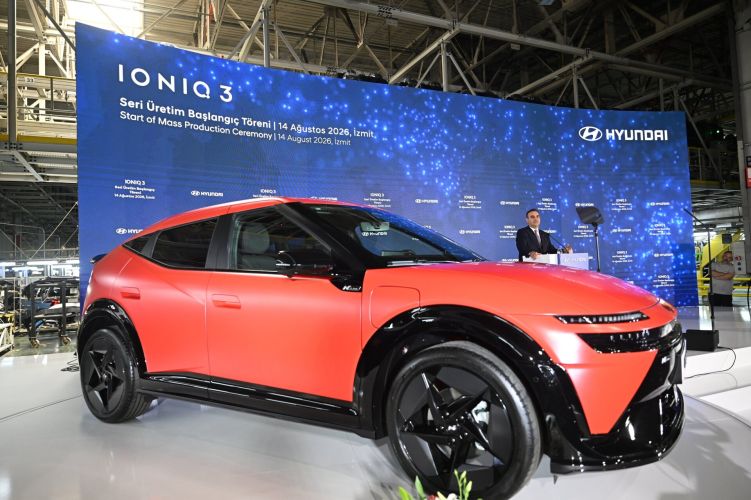

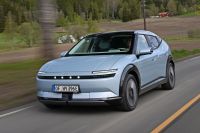
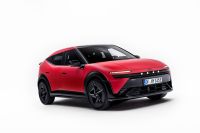
Hyundai Ioniq 3
Technical description:
Battery: 42 kWh or 61 kWh
Charging 10-80%: 29 minutes (42 kWh), 30 minutes (61 kWh)
Wheels: 16 inches
Headlights: LED
Parking sensors: front and rear
Don't miss the Hyundai Ioniq 3 reveal
Leave your e-mail and we'll let you know about the premiere and new details on this model.
Next, you'll create a free account. No spam.
What's new
The Hyundai Ioniq 3 is now open for orders in the UK as another all-electric model carrying the Ioniq badge. It enters the crowded electric supermini sector with a starting price of £21,870, putting it below £22,000. That figure applies to the base Advance model with the smaller battery and a no-cost metallic red paint option.
The new model shares its underpinnings with the Kia EV2, yet the listed pricing makes it £2,375 cheaper than its sibling. It is also £1,885 less expensive than the smaller Hyundai Inster electric supermini. That positioning makes price a central part of the Ioniq 3 story, rather than treating the car simply as another addition to the electric range.
The production car follows Hyundai’s Art of Steel design theme. The clearest example is the surfacing along the flanks, where creases run towards the rear spoiler. Colour-contrasting wheelarches give the car a squat stance, while the upright tail and narrow rear light bar are compared in the report with the Alfa Romeo SZ.
- The Advance version with the small battery starts the range.
- Advance, Premium, Ultimate and N Line Evo models with the larger battery receive a Hyundai Reservation Saving.
- N Line Evo adds a sportier bodykit, a larger rear lip spoiler, N Line badging and 19-inch alloy wheels.
Specifications and technology
Batteries, charging and equipment
The line-up includes a 42kWh battery and a larger 61kWh pack. The 42kWh Ioniq 3 can charge at up to 119kW, giving a 10 to 80 per cent top-up in 29 minutes. The 61kWh models charge at up to 110kW and take one minute longer for the same top-up.
Because the car shares electric vehicle technology with the Kia EV2, Hyundai uses the same choice of electric motors. The entry-level 42kWh car is described as the quickest version, although the full acceleration figure appears in an unreadable form in the supplied text. Power output, torque, top speed and WLTP range are not given in complete form.
Advance trim brings 16-inch alloy wheels, LED headlights and rear lamps, rounded and less aggressive front and rear bumpers, plus a smaller rear lip spoiler than the one fitted to N Line Evo. The equipment list also includes front and rear parking sensors, dual-zone automatic climate control, a rear-view monitor, a smart key with push-button start and adaptive cruise control. There is no separate driver display, so driver-related information is shown on the central screen.
| Parameter | Value |
|---|---|
| Batteries | 42kWh or 61kWh |
| DC charging, 42kWh | up to 119kW |
| DC charging, 61kWh | up to 110kW |
| 10-80% charging | 29 minutes for 42kWh, 30 minutes for 61kWh |
| Boot capacity | 441 litres, 1,213 litres with rear seats folded |
| Starting price | £21,870 |
Markets, prices and availability
UK pricing and rivals
Orders for the Ioniq 3 opened in the UK on 17 August 2026. Hyundai says it is confident that all larger-battery Ioniq 3 versions will receive the government’s £1,500 Electric Car Grant, so customers placing a reservation now are given a £1,500 Hyundai Reservation Saving on those models. The car is expected to be eligible because the Kia EV2 sister model, already available through a car-buying service, qualifies for the Government’s £3,750 Electric Car Grant.
- Larger-battery Advance with the reservation saving: £23,870.
- Premium with the reservation saving: £25,570.
- Ultimate with the reservation saving: from £28,070.
- N Line Evo with the reservation saving: £30,070.
Against named rivals, the base Ioniq 3 is £1,915 cheaper than the upcoming entry-level Cupra Raval and £1,575 cheaper than the Renault 4. The report also names the Renault 5, Skoda Epiq and Volkswagen ID. Polo as cars in the same competitive set. The comparison places Hyundai directly among small electric cars where the headline price carries real weight.
Premium trim keeps the same exterior body styling as Advance, but adds 17-inch alloy wheels and tinted windows. Ultimate moves to 18-inch alloys, integrated sat-nav, matrix LED headlights with a dynamic welcome function, heated front seats, a heated steering wheel, rear passenger air vents, reclining rear seats and ambient lighting. A £2,500 Comfort Pack adds heated rear seats, front-seat ventilation, a Bose sound system and a smartphone key.
N Line Evo brings a sportier bodykit, a larger rear lip spoiler, N Line badging and 19-inch wheels. Inside, it has suede and cloth upholstered N Line seats, red cabin accents, a 360-degree monitor and remote park assist. Practicality is also part of the package, with 441 litres of boot space once the load-bay floor is removed and 1,213 litres with the rear seats folded.
Verdict
The Hyundai Ioniq 3 arrives in the UK with a low entry price, two battery sizes and a range that stretches from Advance to N Line Evo. Its key numbers are the £21,870 starting price, 29 or 30-minute 10-80 per cent charging and a 441-litre boot, all of which give it clear points of comparison against the small electric cars named alongside it.
Frequently asked questions
When is the Hyundai Ioniq 3 premiere?
The Hyundai Ioniq 3 premiere is listed in the CarsUpcoming calendar for 17 August 2026. UK orders opened on the same date.
When will the Hyundai Ioniq 3 go on sale in the UK?
Hyundai Ioniq 3 orders opened in the UK on 17 August 2026. No separate delivery date has been announced.
How much will the Hyundai Ioniq 3 cost?
The Hyundai Ioniq 3 starts at £21,870 in the UK for the base Advance model with the smaller battery. Larger-battery versions with the Hyundai Reservation Saving are listed from £23,870 for Advance, £25,570 for Premium, from £28,070 for Ultimate and £30,070 for N Line Evo in the UK.
Should I wait for the Hyundai Ioniq 3 or buy the current model now?
No predecessor or replaced model is specified, so a direct comparison is not possible yet. What is known is that the Ioniq 3 brings 42 kWh or 61 kWh batteries, 29 or 30-minute 10–80% charging, and a UK starting price of £21,870.
What batteries and charging does the Hyundai Ioniq 3 have?
The Hyundai Ioniq 3 is offered with 42 kWh or 61 kWh batteries. A 10–80% charge takes 29 minutes with the 42 kWh battery and 30 minutes with the 61 kWh battery.
Create account
What you get with a free account
- Follow the premieres of the cars you care about – all in one place
- An e-mail when a car you follow is revealed
- Free and no spam
Log-in
Please log-in to subscribe!