
Car Calendar
Receive notifications about upcoming cars
No account yet?
What you get with a free account
- Follow the premieres of the cars you care about – all in one place
- An e-mail when a car you follow is revealed
- Follow more premieres with a single click
- Free and no spam
Already have an account?








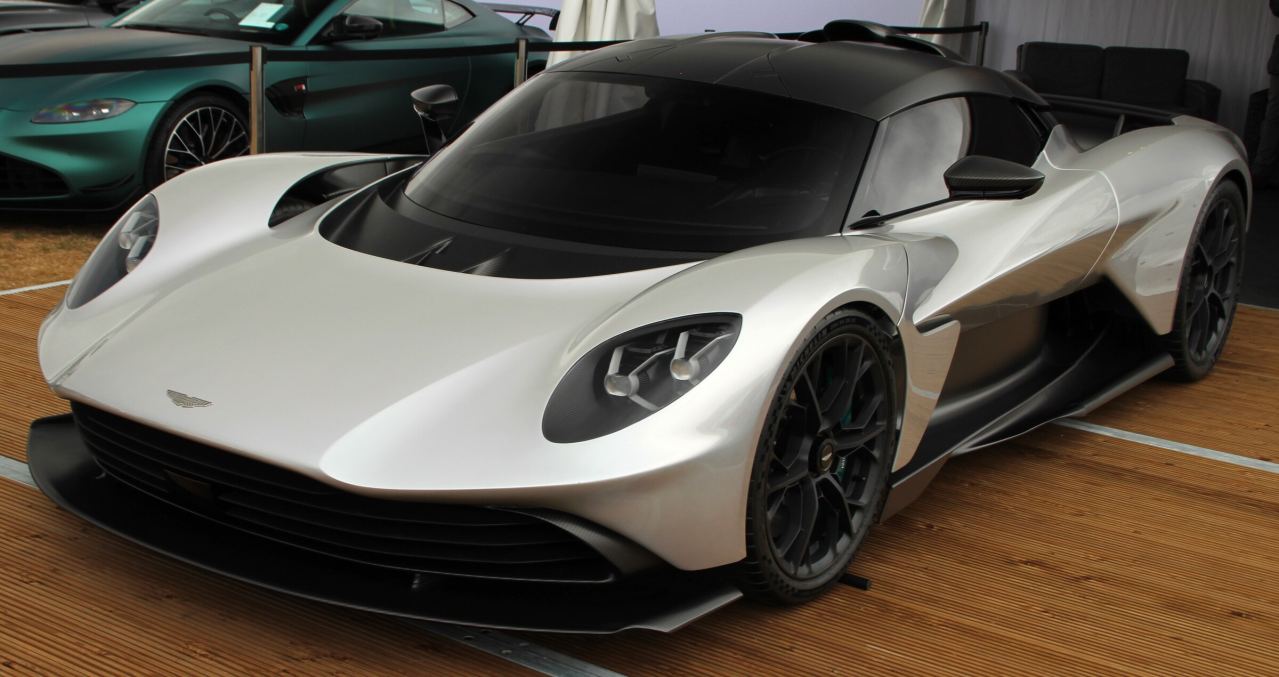



Aston Martin Valhalla
Technical description:
Model: Valhalla
Drive: Hybrid
Power: 1,064 bhp
Torque: 1,100 Nm
0-62 mph acceleration: 2.5 s
Don't miss the Aston Martin Valhalla reveal
Leave your e-mail and we'll let you know about the premiere and new details on this model.
Next, you'll create a free account. No spam.
What's new
Aston Martin Valhalla is in its final road and track validation phase before production begins in Q2 2025. The car was revealed in full late last year and is now being tested on UK roads as well as at the IDIADA proving ground near Barcelona. Production is limited to 999 units, placing this mid-engined hybrid hypercar firmly in low-volume territory.
The production car is not exactly the same machine first shown more than three years ago. The clearest change is output, because Aston Martin has confirmed a figure around 100bhp higher than originally promised. The final Valhalla produces 1,064bhp and 1,100Nm from a twin-turbocharged V8 assisted by three electric motors.
Simon Newton, Director of Vehicle Performance and Attributes, said the unusually wide dynamic range of the car had created many opportunities for the engineering and dynamics teams. He said the work focused on integrating active aerodynamics and control systems to deliver the intended road and track character. Aston Martin also says the Valhalla benefited significantly from knowledge within its Formula One operation, which was directly involved in development.
Specifications and technology
Powertrain, chassis and aerodynamics
Valhalla is Aston Martin's first plug-in hybrid and the first of its cars to have a dedicated EV range. The powertrain is centred on a 4.0-litre petrol V8 supported by three electric motors. Two radial-flux electric motors are mounted on the front axle, enabling torque vectoring and allowing the car to run in fully electric mode for up to 8 miles.
The car is built around a bespoke carbon-fibre tub with aluminium subframes at each end. The suspension layout is heavily influenced by motorsport, with F1-style double-wishbone pushrod suspension at the front, inboard springs and dampers, and a five-link arrangement at the rear. Instead of the Multimatic units initially planned, Aston Martin will use Bilstein DTX dampers, as fitted to its front-engined models.
Aston Martin quotes a 0-62mph time beginning with 2 seconds, although the supplied text cuts off the exact figure after the number 2. Braking hardware consists of 410mm front and 390mm rear carbon-ceramic discs. The front axle uses six-piston calipers, while the rear has four-piston units. Electrically assisted power steering works with the latest vehicle dynamics management system.
- combined output: 1,064bhp,
- torque: 1,100Nm,
- powertrain: plug-in hybrid V8 with three electric motors,
- front wheels: 20-inch alloys,
- rear wheels: 21-inch alloys,
- option: magnesium wheels with Michelin Pilot Sport Cup 2 tyres, reducing unsprung weight by 12kg.
Active aerodynamics include an adjustable front splitter and a deployable rear wing. These elements work with the passive and active airflow management built into the bodywork, with Aston Martin pointing to lessons learned from the Valkyrie project. Standard tyres are bespoke Michelin Pilot Sport S 5s, while the optional magnesium wheel package adds the more track-focused Cup 2 tyre.
| Parameter | Value |
|---|---|
| Power | 1,064bhp |
| Torque | 1,100Nm |
| Electric range | up to 8 miles |
| Brake discs | 410mm front, 390mm rear |
| Wheels | 20-inch front, 21-inch rear |
| Planned production | 999 units |
Interior and equipment
The cabin has a simple motorsport-led layout and makes extensive use of chopped carbon composite in the main dashboard structure and slim centre console. Unlike Aston Martin's front-engined sports cars, the Valhalla has a narrower cabin that places the two seats close together. The lower console carries the gear selector, the drive-mode switch and two upright air vents.
Two digital displays are borrowed from Aston Martin's latest models: a 12.3-inch central touchscreen and a 10.25-inch driver display. The small steering wheel has its own rim, but its main controls and hub are taken from other Aston Martin models and, by extension, Mercedes hardware. Standard equipment includes adaptive matrix LED headlights, dual-zone climate control and several driver-assistance systems.
- autonomous emergency braking,
- forward collision warning,
- active cruise control,
- blind-spot monitoring,
- rear-view camera,
- optional around-view camera system.
Markets, prices and availability
Production of the Valhalla is scheduled to begin in Q2 2025, after the final validation programme on UK roads and at the Spanish proving ground. Aston Martin has not detailed the delivery schedule or how the 999 cars will be allocated between markets. What is confirmed is the small production run, which defines availability before series build begins.
A likely price of £850,000 is expected for each car. That figure is presented as an expectation rather than a full official price list with versions and options. The supplied information does not include named sales markets, first-customer delivery dates, warranty details, option prices or a list of direct rivals.
Within Aston Martin's range, Valhalla follows the technical direction established by Valkyrie while sitting alongside the brand's heavily revised sports car line-up. Lawrence Stroll, speaking when the car was unveiled at Silverstone in 2021, described it as Aston Martin's first series-production mid-engined supercar. He also linked the Silverstone reveal with the Aston Martin Cognizant Formula One Team and the brand's return to the British Grand Prix after more than 60 years.
Verdict
Valhalla combines a 999-unit production plan, a 1,064bhp plug-in hybrid system and a chassis package shaped by track-focused engineering. The key point is that, after a long development cycle, the car is now close to production in Q2 2025, with final testing aimed at refining the powertrain, active aerodynamics and control systems as one package.
Frequently asked questions
When was the Aston Martin Valhalla premiere or reveal?
In the calendar, the Aston Martin Valhalla premiere was listed for Q2 2025. The car was revealed in full in late 2024, with production scheduled to begin in Q2 2025.
When will the Aston Martin Valhalla go on sale in the UK?
Aston Martin has not announced a UK on-sale date or first-customer delivery schedule for the Valhalla. What is confirmed is planned production from Q2 2025 and a limited run of 999 cars.
How much will the Aston Martin Valhalla cost?
The expected price is £850,000 in the United Kingdom. This is an expectation rather than a full official price list with versions and options.
Should I wait for the Aston Martin Valhalla or buy the current model now?
No direct predecessor for the Valhalla is specified, so a like-for-like replacement comparison is not possible yet. What is known is that Valhalla is a 1,064 bhp plug-in hybrid mid-engined hypercar with a planned 999-unit production run.
What powertrain does the Aston Martin Valhalla use?
The Aston Martin Valhalla uses a plug-in hybrid system based on a 4.0-litre twin-turbo V8 and three electric motors. Total output is 1,064 bhp and 1,100 Nm.
Create account
What you get with a free account
- Follow the premieres of the cars you care about – all in one place
- An e-mail when a car you follow is revealed
- Free and no spam
Log-in
Please log-in to subscribe!