
Car Calendar
Receive notifications about upcoming cars
No account yet?
What you get with a free account
- Follow the premieres of the cars you care about – all in one place
- An e-mail when a car you follow is revealed
- Follow more premieres with a single click
- Free and no spam
Already have an account?








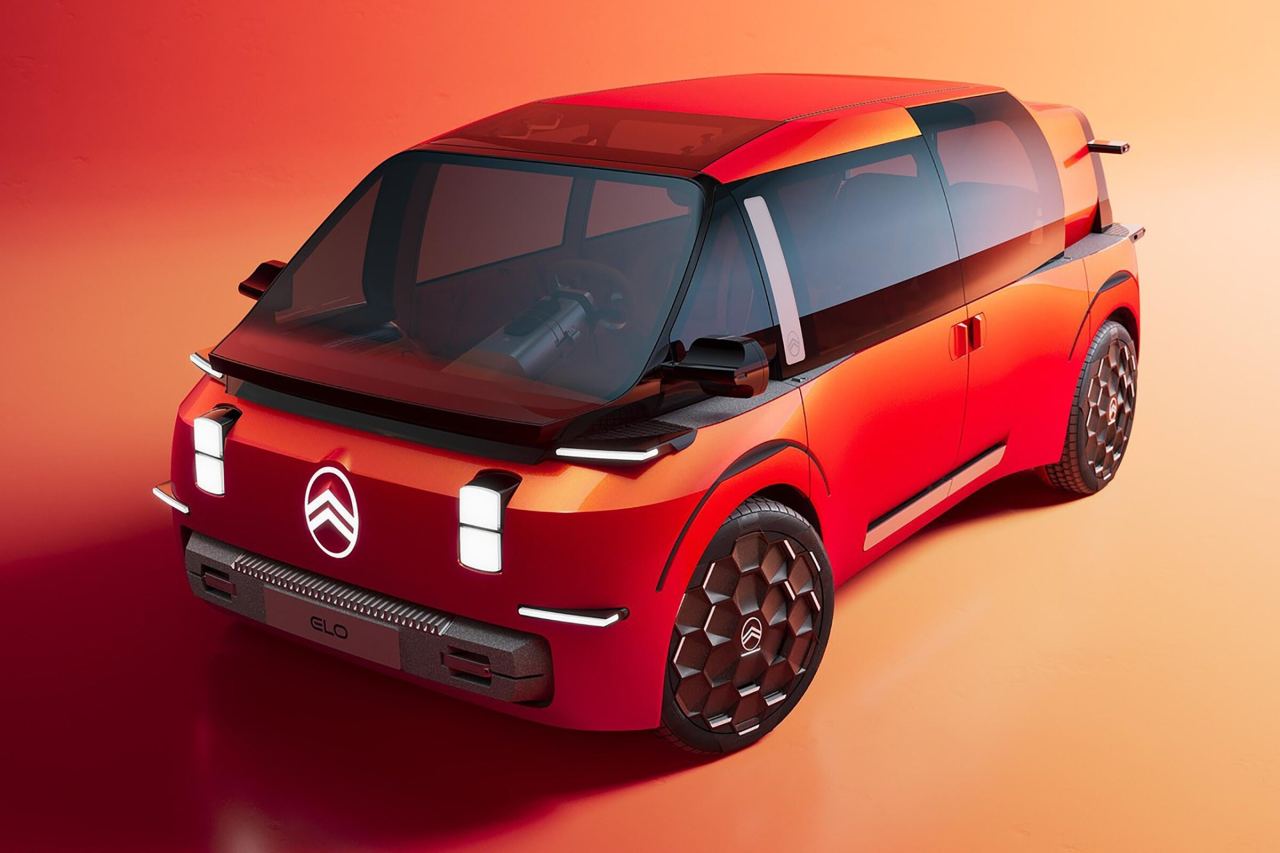



Citroën EloElectric SUV, launch in 2026
Technical description:
Model: Elo
Body type: SUV
Seating capacity: 5
Length: 4500 mm
Width: 1850 mm
Height: 1650 mm
Wheelbase: 2700 mm
Drive: Front-wheel drive
Power: 150 kW
Torque: 300 Nm
Acceleration 0-100 km/h: 8.5 s
Top speed: 160 km/h
Battery: 75 kWh
Battery technology: Lithium-ion
Range WLTP: 450 km
Charging AC: 11 kW
Charging DC: 100 kW
Charging 10-80%: 30 min
Boot capacity: 500 l
Platform: e-CMP
V2L function: Yes
OTA updates: Yes
Safety systems: ABS, ESP, Lane Assist
Positioning in range: Mid-size SUV
Expected launch: 2026
Don't miss the Citroën Elo reveal
Leave your e-mail and we'll let you know about the premiere and new details on this model.
Next, you'll create a free account. No spam.
What's new
Citroën will present the Elo1 concept to the public at the Brussels Motor Show on 9 January 2026. The vehicle is described as a rolling development laboratory rather than a direct preview of a production car. Its purpose is to show how driving, working, resting and leisure activities could be combined inside one highly flexible cabin.
The name is linked with the ideas of Rest, Play and Work. The cabin is designed for six people and for several uses beyond transport, including stops with mattresses, a projector and sports equipment on board. After the Oli concept shown in 2022, Elo1 is another Citroën study used to test ideas for future vehicles.
The equipment list is deliberately broader than in a conventional passenger car. Citroën mentions removable modular seats, a central driver's seat, boules balls, vacuum-packed mattresses, a projector with a screen and a skateboard. Many of these items are stored behind carefully designed flaps or in dedicated compartments, so the vehicle becomes a stage that its users can configure.
- modular seats that can be removed and used outside the vehicle,
- a central driver's seat positioned in the middle of the command area,
- boules balls hidden in storage areas,
- vacuum-packed mattresses for the cabin,
- a projector with a screen,
- a skateboard and accessories for urban escapes.
Specifications and technology
The body is 4.10 metres long, which the description places at the lower end of today's compact class. Inside, however, the available space is presented as the core of the concept: the cabin height is 1.70 metres, and the access width between the opposing side doors is 1.92 metres. A glass area of 4.5 square metres brings plenty of light into the interior.
The cabin layout gives parked use almost the same status as driving. The driver's seat can rotate through 360 degrees, a solution familiar from camper vans, and here it supports the idea of turning the cabin into a place for work, relaxation or play. Citroën says every detail was considered, with items such as cups and boules balls only becoming visible after opening flaps or storage areas.
Materials and onboard solutions
Two regular sockets for bidirectional charging are integrated into the side-door sill area in the vehicle floor. Next to them is a connector valve for hoses, allowing the onboard mattresses or balls to be inflated. This small functional feature explains the concept better than a purely visual styling cue.
Citroën worked with Decathlon and Goodyear on the concept. Goodyear developed new intelligent tyres with split tread surfaces for outdoor use. Decathlon supplied the mattress material, a drop-stitch fabric used especially for surfboards, kayaks and paddleboards.
The two mattresses are taken from their storage compartments, unfolded and inflated via the pressure valve. The structure of the material gives them enough firmness that, once installed in the passenger compartment, they do not require special reinforcement to remain in place. The dashboard solution also avoids a conventional display arrangement: flat screens are reflected onto a transparent screen with reflective film, placing coloured information across the full width of the windscreen.
| Parameter | Value |
|---|---|
| Length | 4.10 m |
| Interior height | 1.70 m |
| Door access width | 1.92 m |
| Glass area | 4.5 m² |
| Seats | 6 |
Markets, prices and availability
The public debut is scheduled for 9 January 2026 at the Brussels Motor Show. Citroën presents the car as a development laboratory and a showcase of possibilities, so it should not be read as a market-ready vehicle. The description makes clear that this particular vehicle will not populate the roads in production form.
No price, sales markets, trim versions, powertrain data, power output, battery capacity or range are given. The focus is instead on space, materials, storage ideas and functions that may appear in future Citroën and Stellantis vehicles. Citroën design director Pierre Leclercq said the design teams had a lot of fun creating a model thought through down to the smallest detail, intended to be practical, entertaining and clever.
Role of the concept
The project starts from the observation that, statistically, a car spends around 95 percent of its life standing still. That is why the concept treats the vehicle as a lounge, a tiny house-like space and a mobile work-life balance tool when parked. The colour-shifting paint and the square form reinforce the invitation to activity rather than simply pointing to a future production shape.
In that context, the sports gear, mattresses, projection screen and hidden compartments are not decorative extras. They are part of a test of how a compact vehicle from the outside can serve six people when the cabin is not organised only around traditional seats and a luggage compartment.
Verdict
Citroën Elo1 is best understood as a collection of tested ideas rather than as the announcement of a single showroom model. Its strongest argument is the way it combines hard figures, including a 4.10-metre length, six seats and a 1.92-metre access opening, with practical parked-use functions such as mattresses, sockets, an air valve and a rotating driver's seat.
Frequently asked questions
When is the Citroën Elo reveal?
The public reveal of the Citroën Elo1 was scheduled for 9 January 2026 at the Brussels Motor Show. CarsUpcoming lists the premiere with day-level precision as 9 January 2026.
When will the Citroën Elo go on sale in the UK?
Citroën has not announced a UK on-sale date. The Elo1 is described as a development laboratory and a showcase of ideas, not as a market-ready production car.
How much will the Citroën Elo cost?
The price of the Citroën Elo has not been announced in the UK or for any other market. Citroën has not given sales markets, trim versions or production pricing because this vehicle is not presented as a showroom model.
Should I wait for the Citroën Elo or buy the current model now?
A direct comparison is not possible yet because Citroën has not said that the Elo replaces any current model. What is known is that the Elo1 tests future ideas such as a modular cabin, a rotating driver’s seat, mattresses, a projector and parked-use functions.
What exactly is the Citroën Elo?
The Citroën Elo1 is a concept and rolling development laboratory rather than a direct preview of a production car. It is 4.10 m long, has six seats, a 1.70 m cabin height and is designed around driving, working, resting and leisure use.
Create account
What you get with a free account
- Follow the premieres of the cars you care about – all in one place
- An e-mail when a car you follow is revealed
- Free and no spam
Log-in
Please log-in to subscribe!